1,000+ claims.
From CSV to demand letter.
1,000+
claims per import from CSV file, processed in one pass
Minutes
instead of weeks from CSV upload to the first demand letter ready to send
Product
GL Inkasso uses UNOY as the UNOY Claims Engine.
UNOY Claims Engine is the product suite for high-volume matters as a controlled pipeline. At GL Inkasso in the Co-Build model: claims triage with confidence routing, escalation to litigation via Advocat and WinCause.
In use
- Claims triage by credit standing
- Confidence routing 3 tiers
- Litigation escalation via Advocat
- Demand letters generated
- Audit trail for every claim
Model & key data
- Co-Build · self-maintained
- Claims bulk processing
- Advocat + WinCause connected
View UNOY Claims Engine for high-volume operations in detail →
Who is GL Inkasso?
GL Inkasso FlexCO
GL Inkasso FlexCO is a young debt collection service provider that scales the processing of claim volumes via a platform. Clients upload CSV files with hundreds or thousands of claims; UNOY OS validates them and generates a demand letter ready to send for each matter, with the correct legal basis, a correct address, and a documented reminder status.
The model outperforms classic debt collection because the critical operation, preparing the letter, runs entirely algorithmically. GL Inkasso does not scale through headcount.
The Problem
What was difficult before.
Classic debt collection: every matter is opened individually, checked against the legal basis, a demand letter drafted. With a few matters per day that works. With thousands of matters per client it becomes a bottleneck.
GL Inkasso wanted to be able to process thousands of matters in parallel without quality suffering. Every matter needs a legally sound letter. Every claim needs the correct address, the correct file reference, the correct legal basis.
The platform was to process CSV imports, check each row against completeness and legal rules, flag missing data and convert complete matters into demand letters ready to send. In minutes, not weeks.
Voice
Why GL Inkasso relies on UNOY OS.
With UNOY we can prepare and import thousands of collection cases in a fraction of the time. The demand letters go out before the case is even opened.
In use · Co-Build
GL Inkasso handles
Claims processing as its own service · debt collection licence and liability in-house
UNOY OS as platform
Bulk import + validation engine + letter generator · set up Co-Build, ongoing operation by GL
Clients as principals
CSV files in · demand letters out · on litigation escalation, handover to attorney
Application
The workflow in detail.
CSV upload in, demand letters ready to send out. In between, a validating workflow chain runs.
Step
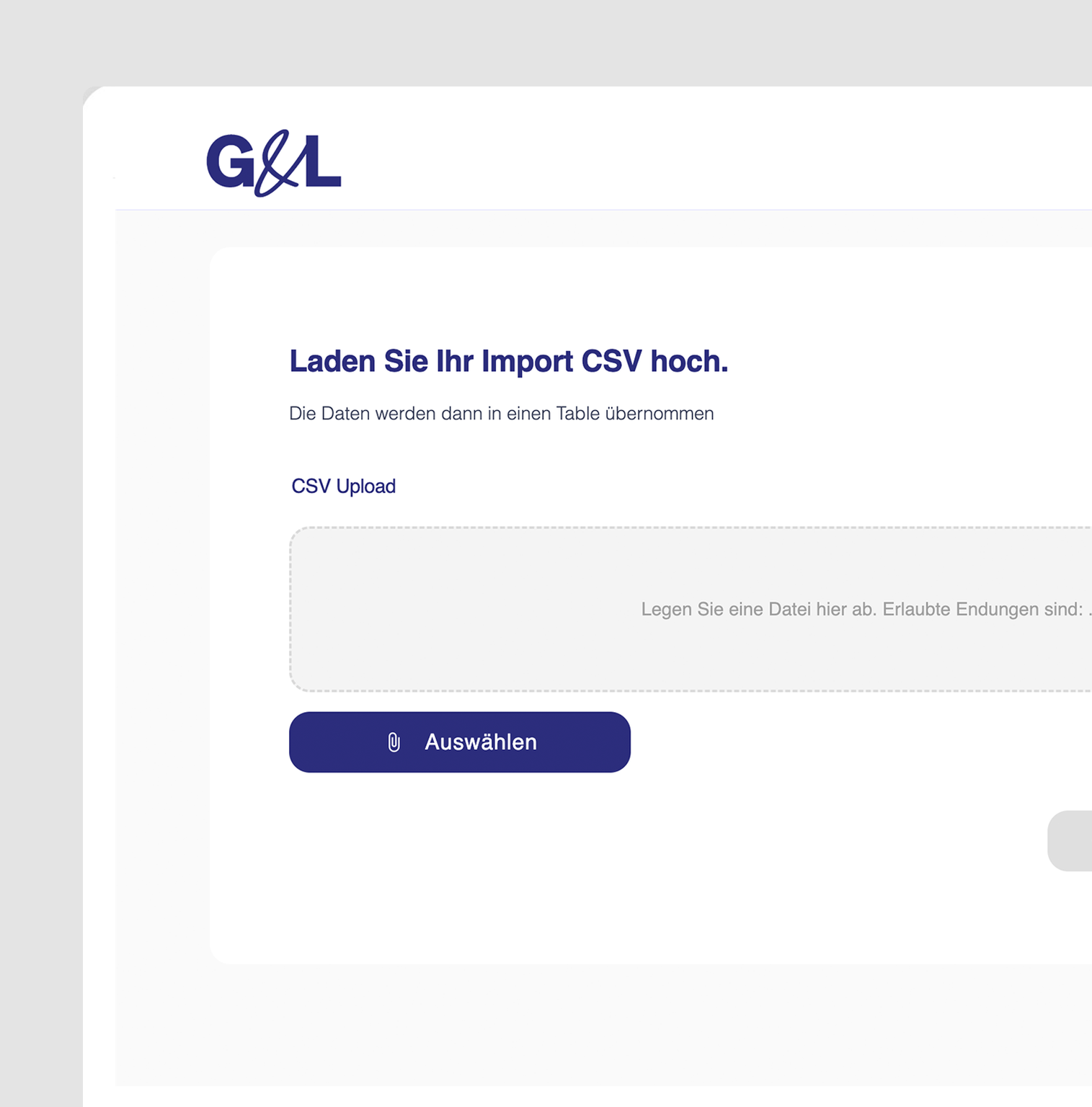
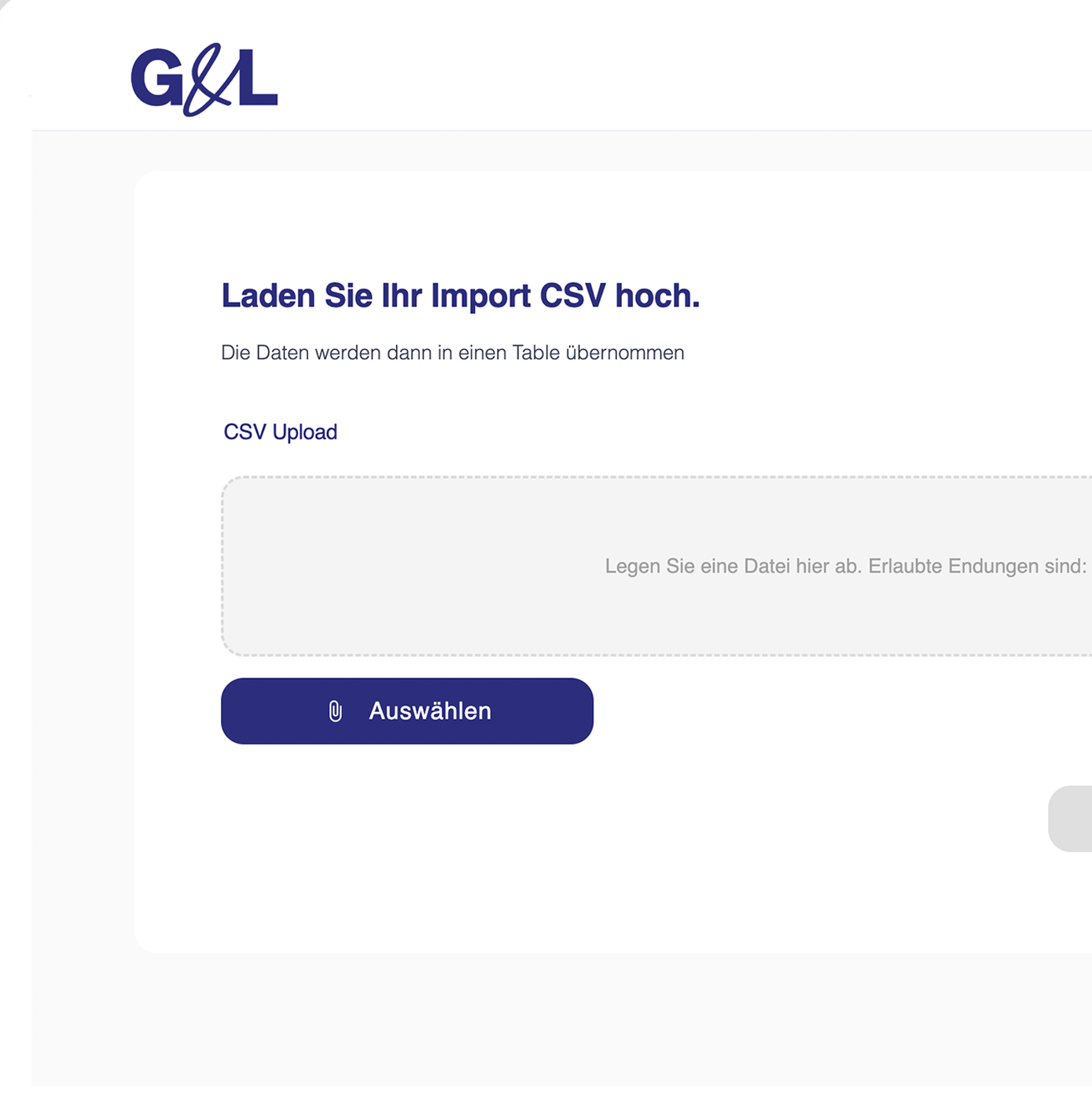
Import CSV.
01 · Step
The client uploads a CSV with claims data. UNOY OS checks the column schema, maps to internal fields. First validation: are mandatory fields filled?
Step
Validate against ruleset.
02 · Step
Each row against completeness rules (address, claim amount, reminder status), against the legal basis (appropriate jurisdiction, limitation status), against client rules.
Routing logic
Clear claim: demand letter is generated · Borderline case (address unclear, claim disputed, limitation possible): escalation to case handler with explanation · No match: stop, query back to client.
Step
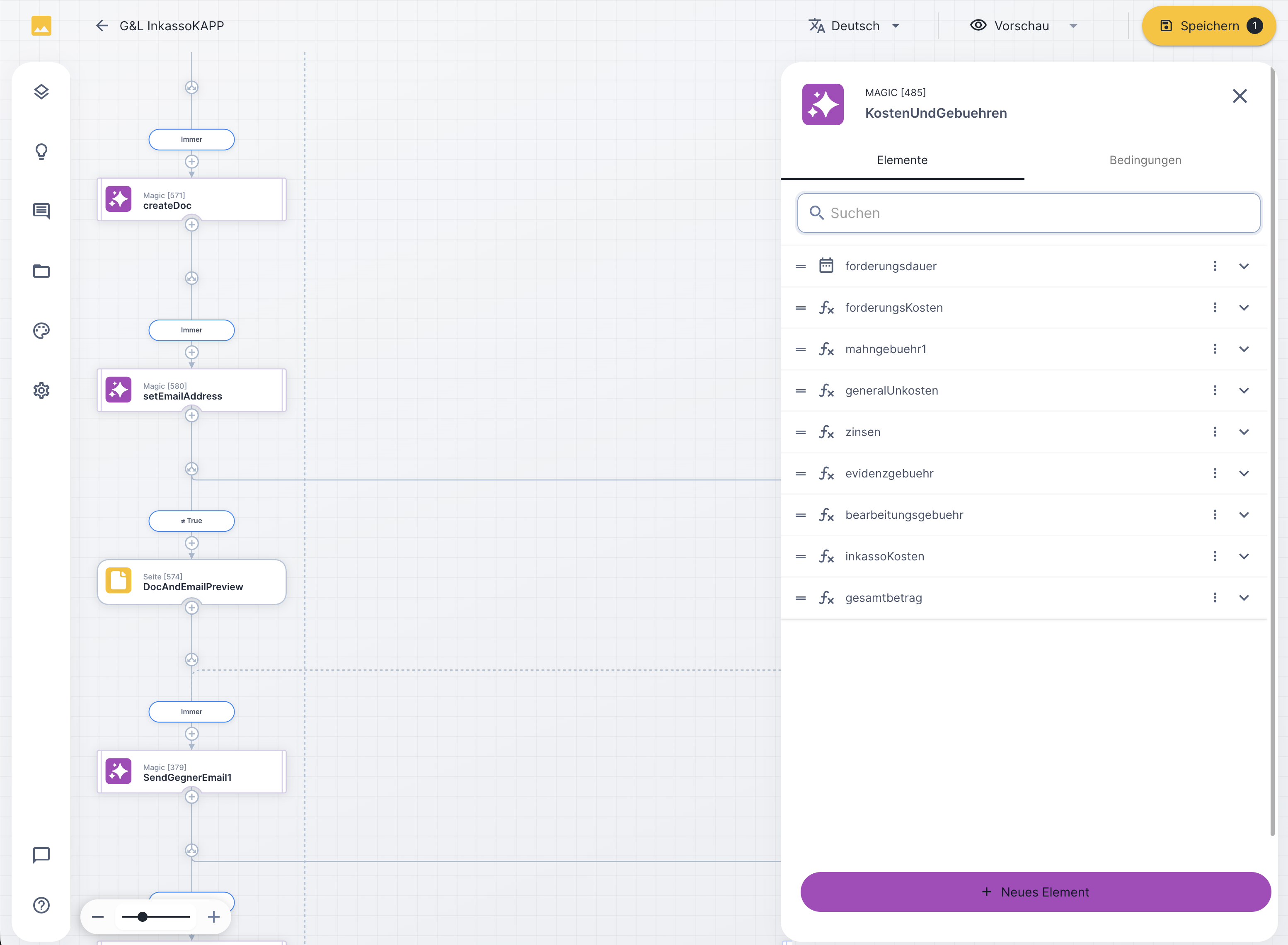
Generate demand letter.
03 · Step
For each validated matter: demand letter with the correct legal basis, correct address, documented reminder status. PDF, ready to send.
Step
Trace dispatch.
04 · Step
Every letter with an audit trail: which data was used, which ruleset version, who approved. Provable for later court proceedings.
Lessons learned
What we learned.
GL Inkasso was one of the first high-volume debt collection customers in UNOY production. What we learned together:
High-volume debt collection lives on speed, but speed without legal precision is worthless. UNOY OS combines both: thousands of matters in parallel, every letter checked against the legal basis.
CSV imports are often data-dirty. The validation layer is therefore the most important piece: matters that are not unambiguous go into a queue for human review.
Frequently asked questions
What you want to know.
What happens to cases that fail validation?
They go into a review queue with a specific note on what is missing or incorrect. The client can correct and resubmit for validation. No rule-based dispatch under uncertainty.
Who is liable if a demand letter is legally incorrect?
GL Inkasso. They are the licensed debt collection service provider; their legal team approves the ruleset version running in the workflow. UNOY OS is the platform.
Can the system be extended to other claim types?
Yes. Rental claims, B2B claims, insurance damages -- every claim type gets its own ruleset.
How secure is client data?
EU data residency in data centres certified to ISO 27001, SOC 2 Type II and ISO/IEC 42001 (AI Management). GDPR-compliant, with a data processing agreement. Client separation per debt collection customer.
Does the system scale to tens of thousands of claims?
Yes. The current architecture is designed for peak loads. Largest observed import: 5,000 cases in one CSV, processed in under 15 minutes.
What happens if UNOY ceases operations?
On contract termination, GL Inkasso receives all workflows, validation rules and audit logs as an export. The rulesets are documented as JSON logic, portable to another provider. The debt-collection-specific retention obligation for claims files remains with GL Inkasso. No lock-in.
§ 07 · Tech Stack
What runs under the hood.
CSV parser with schema mapping
Configurable column maps per client
Validation engine
Multi-level rule check: schema, plausibility, legal basis
Address validation
Connection to address data for plausibility checking
Reminder status tracking
Documented reminder status per claim
PDF generator
Letterhead, layout, legal basis as templates
Audit trail
Every action versioned, documented for court proceedings
Bulk processing
Thousands of matters in parallel
Integration with existing systems
CSV bulk import from creditors · reminder software · letter generation · DocuSign · postal dispatch provider · Advocat (handover on litigation escalation) · WinCause (claim value & litigation preparation) · audit storage.
Data residency & GDPR
EU data centres in Frankfurt and Vienna · sub-DPA on request · sub-processor list documented · claims data separated per principal, no cross-access.
AI governance to ISO/IEC 42001
UNOY OS implements an AI management system to ISO/IEC 42001. Matter inventory, risk assessment per workflow, approval stamp per matter, quarterly review.
Other customers
More customer cases.
FairPlane
100,000+ passenger rights cases per year, systematically reviewed with expert sign-off.

Zero Insurance
Claims processed in hours instead of days.

SKW Schwarz
Review engagement letters, manage playbooks.
Give us a real matter.
In 45 minutes we review your matter, free of charge and without obligation. Self, Co-Build or Delivery, depending on what fits.